Breathing problems during sleep range from blocked-airway events to reduced respiratory effort and shallow breathing, so the right long-term plan depends on the documented disorder. You will learn which warning signs need assessment, how testing and severity are determined, how treatments compare, and how to monitor safety and related conditions over time.
Key takeaways
- Seek assessment for repeated pauses, gasping, or unexplained daytime sleepiness.
- A sleep study identifies the breathing pattern and measures severity using the AHI.
- Use CPAP consistently and address mask leaks, dryness, travel, and missed nights.
- Review treatment sooner when symptoms persist or heart, lung, or neurological risks exist.
Which sleep breathing pattern needs medical attention?
Repeated breathing pauses during sleep deserve medical assessment, even without loud snoring. Obstructive sleep apnea involves repeated upper-airway collapse. Central sleep apnea involves reduced or absent respiratory effort, while sleep-related hypoventilation means inadequate breathing causes carbon-dioxide retention during sleep.
| Pattern | What happens | Common contributors |
|---|---|---|
| Obstructive sleep apnea | The throat repeatedly narrows or closes | Airway anatomy, weight, menopause |
| Central sleep apnea | The brain temporarily reduces or stops breathing effort | Opioids, heart failure, stroke, high altitude |
| Sleep-related hypoventilation | Breathing is too shallow to remove enough carbon dioxide | Lung, muscle, medication or obesity-related disorders |
Seek prompt assessment for:
- Witnessed breathing pauses, gasping or choking
- Morning headaches or unrefreshing sleep
- Resistant hypertension despite treatment
- Excessive daytime sleepiness
- Unexplained concentration or memory problems
- Impaired driving, near-misses or sleepiness while operating machinery
Women are sometimes missed because insomnia, fatigue, mood symptoms, fragmented sleep or headaches replace the stereotypical loud-snoring presentation. Menopause and pregnancy can increase concern; witnessed apneas in pregnancy warrant evaluation rather than dismissal as a normal symptom.
Untreated sleep-disordered breathing is associated with hypertension, atrial fibrillation, cardiovascular strain, stroke risk, insulin resistance, mood and cognitive effects, workplace accidents and driving crashes. These are documented sleep disordered breathing complications and long term sleep breathing risks, not proof that apnea caused every cardiovascular event.
Persistent sleepiness creates immediate safety risk: do not drive until assessed.
How clinicians confirm the disorder and grade its severity
Clinicians confirm the disorder by matching your symptoms with your history, examination and objective sleep data—not by snoring alone. They ask about witnessed pauses, gasping, sleepiness, insomnia, morning headaches, sleep schedule, shift work, medication use, alcohol, opioids, pregnancy status, and cardiovascular or neurological conditions such as heart failure or prior stroke.
They also examine body weight, neck size, nasal airflow, jaw structure, blood pressure and signs of neuromuscular weakness.
The Epworth Sleepiness Scale asks how likely you are to doze in eight everyday situations. A high score supports further assessment; it does not diagnose sleep apnea, and a low score does not rule it out.
Overnight home sleep apnea testing suits selected adults with a clear suspicion of uncomplicated obstructive sleep apnea. It is not the right test for everyone.
- Choose in-laboratory polysomnography when significant cardiorespiratory disease, suspected hypoventilation, chronic opioid use, neuromuscular weakness, prior stroke or severe insomnia is present.
- Arrange polysomnography when a home test is technically inadequate or negative but suspicion remains high; a negative home result does not reliably exclude the disorder.
- Interpret the apnea-hypopnea index (AHI) as breathing events per hour of sleep, or per hour of recording with home testing: 5 to less than 15 is mild, 15 to less than 30 is moderate, and 30 or more is severe.
Oxygen drops, sleep arousals and carbon-dioxide retention also affect treatment decisions. Together, these findings guide chronic sleep apnea management.
Building a chronic management plan instead of stopping at diagnosis
A chronic sleep apnea management plan matches treatment to the event pattern, symptoms, anatomy and long term risks. For obstructive events, continuous positive airway pressure is usually the most effective option, but a diagnosis alone is not a complete plan.
| Option | What it does | When it fits |
|---|---|---|
| CPAP | Delivers steady airway pressure | First choice for many adults with obstructive events |
| Auto-adjusting PAP | Changes pressure within a prescribed range | When pressure needs vary during sleep, under clinician guidance |
| Bilevel PAP | Uses separate inspiratory and expiratory pressures | Selected patients; it is not an automatic upgrade from CPAP |
| Mandibular advancement device | Moves the lower jaw forward | Adults who cannot tolerate CPAP or prefer an alternative; use a custom, titratable device |
| Positional therapy | Limits back-sleeping | Events occur mainly while supine |
| Weight-management treatment | Reduces airway load and disease severity | Helpful alongside treatment, but not a dependable cure |
An oral appliance usually reduces events less completely than CPAP. Arrange dental review for bite changes or other side effects, then repeat sleep testing to confirm control. After substantial weight loss or bariatric surgery, repeat testing is still needed because residual disease is common.
Nasal treatment can improve obstruction and PAP tolerance; reserve surgery for a defined anatomical problem after specialist assessment.
Chronic disease management for sleep breathing problems includes symptom review, blood-pressure checks, PAP adherence and efficacy data, and repeat testing after major symptom or weight changes. Coordinate care for obesity, hypertension, diabetes, asthma and COPD. PAP supports, but does not replace, standard treatment for resistant hypertension.
Making CPAP workable at home, during travel and after setbacks
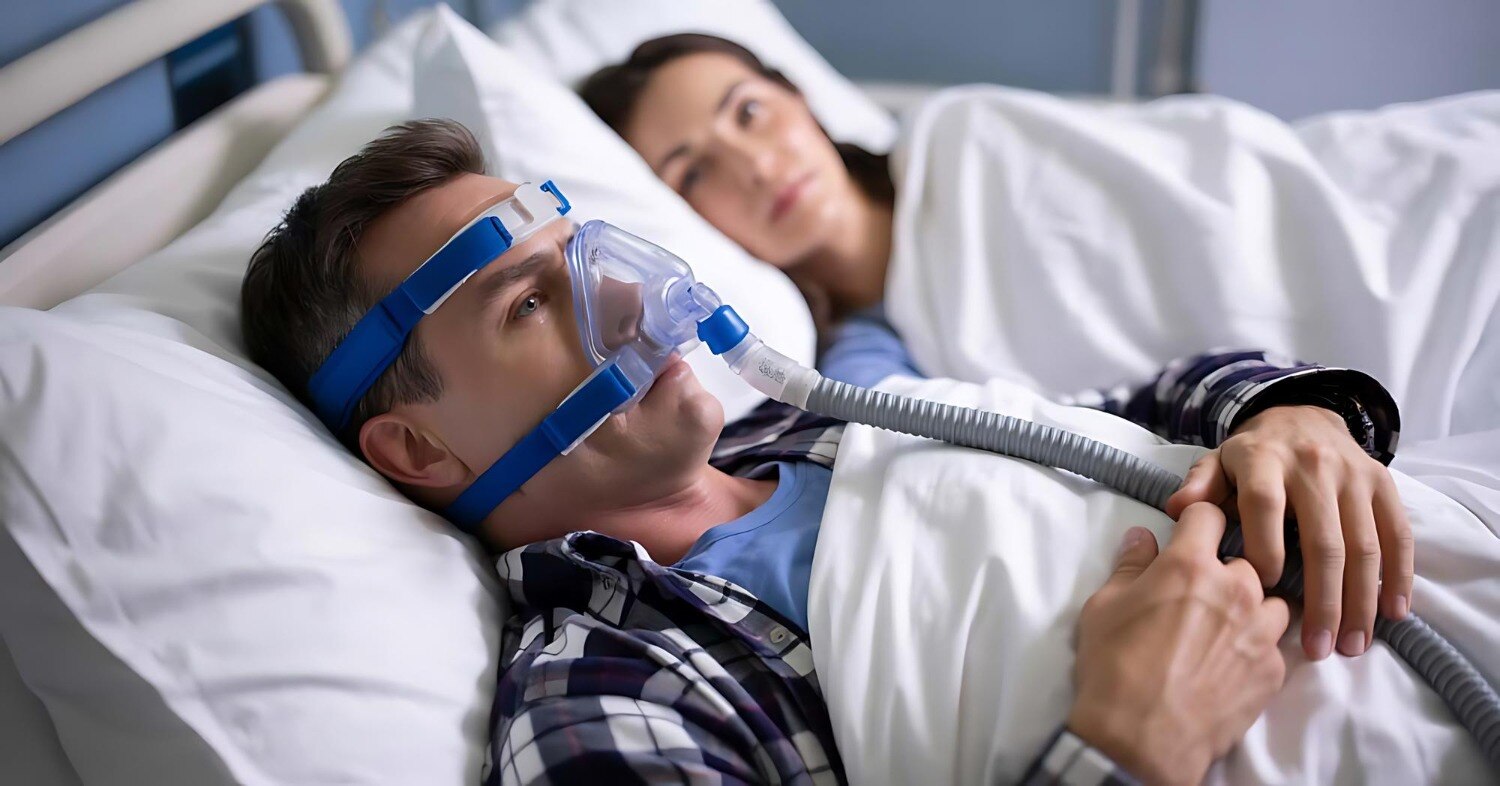
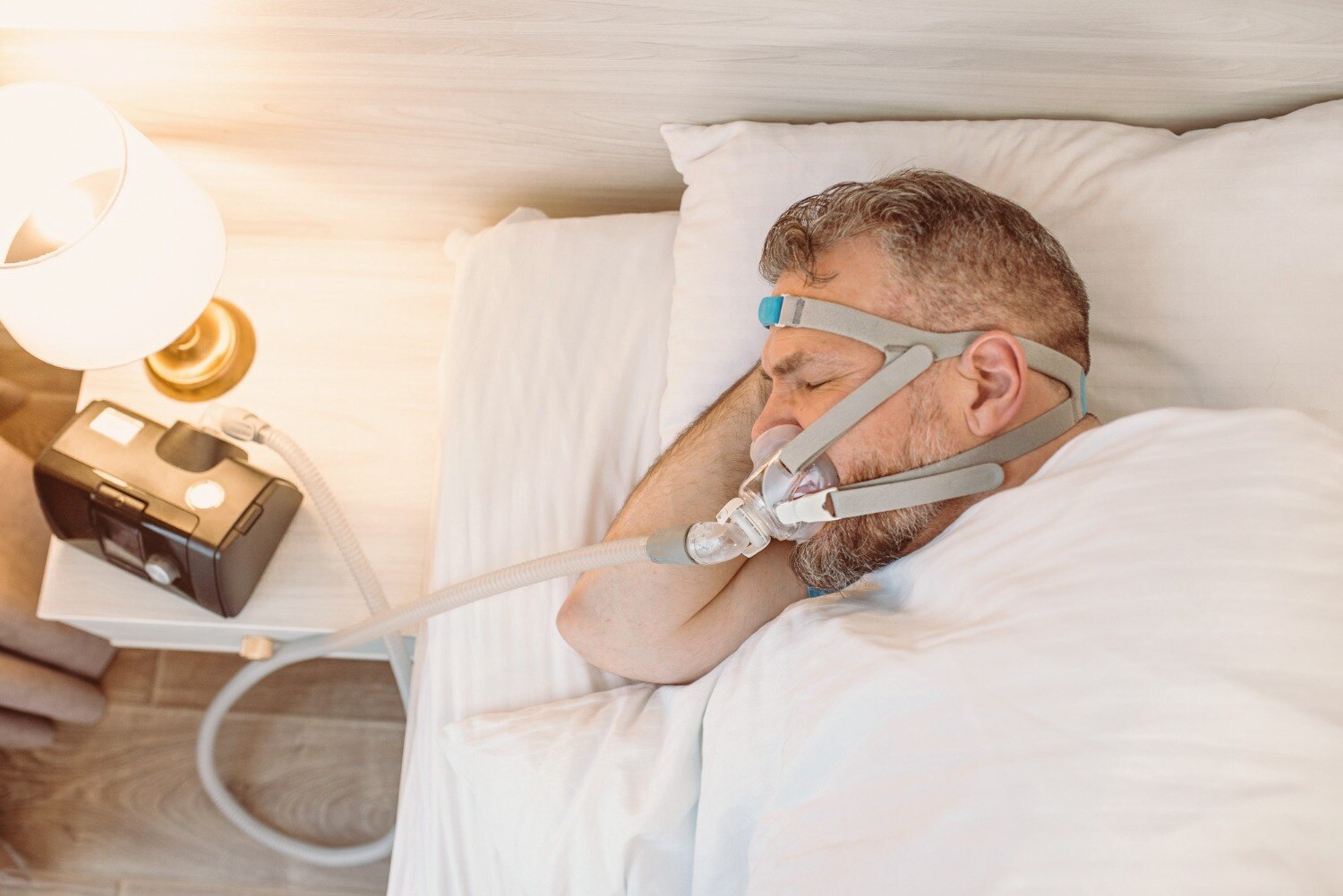
Make CPAP workable by fixing the obstacle, not abandoning chronic sleep apnea management. A mask should seal without painful tightness; check the device’s leak data and ask to try a nasal, nasal-pillow or full-face design when the fit fails.
| Mask design | Best fit | Common problem |
|---|---|---|
| Nasal | You breathe mainly through your nose | Congestion or mouth leak |
| Nasal pillows | You dislike facial coverage | Nasal dryness or irritation |
| Full-face | You breathe through your mouth or have persistent nasal blockage | More bulk and claustrophobia |
Heated humidification can relieve dry nose and mouth. Treat congestion with saline irrigation or clinician-directed nasal medicine; do not stop PAP because your nose is blocked. Ask the prescriber about pressure intolerance, persistent leaks, aerophagia, claustrophobia or continued sleepiness instead of changing pressure yourself.
Clean the mask cushion and tubing as directed, let every part dry fully, and replace cushions, filters and tubing on the equipment provider’s schedule. Skipping cleaning encourages residue and poor sealing.
For travel, pack the device and prescription information in hand luggage. Check voltage requirements before international travel, and ask the equipment supplier how to manage power interruptions.
Early follow-up should review hours used, residual events, leaks, symptoms and blood pressure. Rathi Clinics Nagpur can assess persistent PAP problems and provide prescription-linked respiratory follow-up; buying a machine alone is not treatment.
Related services
Sleep Disordered Breathing conditions Sleep Disordered Breathing conditions A potentially serious sleep disorder in which breathing repeatedly stops and starts. Risk factors include age and obesity. It's more common in men. View service → |
Sleep Related Problems & Snoring (OSA) Sleep Related Problems & Snoring (OSA) Habitual snoring can be a sign of a serious health problem Causes Of Snoring Obstructed nasal airways: Some people snore only during allergy seasons... View service → |
When long-term care needs a different pathway or extra safety checks
Ordinary obstructive-apnea follow-up is not enough when breathing effort disappears, sleepiness persists, or pregnancy changes the risk picture. Central sleep apnea requires evaluation for heart failure, stroke, opioid use, high altitude and other causes before treatment; do not automatically apply an obstructive-apnea plan.
| Pathway | Checks needed | Treatment caution |
|---|---|---|
| Central sleep apnea | Identify the event pattern and assess heart failure, stroke, opioids and other causes | Adaptive servo-ventilation has safety restrictions for some people with heart failure and reduced ejection fraction |
| Persistent sleepiness | Review PAP efficacy and adherence, sleep duration, sedating medicines, alcohol, depression and other sleep disorders | Do not use wake-promoting medication to mask untreated obstruction or poor PAP use |
| Pregnancy | Promptly assess witnessed apneas or significant sleepiness, with obstetric and sleep follow-up | CPAP is generally preferred when indicated, but it has not been proven to prevent every pregnancy complication |
Anyone who remains sleepy must avoid driving and operating machinery until risk is assessed. Pregnancy-related airway and weight changes can worsen obstruction, and sleep apnea is associated with hypertensive disorders and gestational diabetes; symptoms, pressure needs and device use can change during pregnancy and after delivery.
Bring new symptoms, medication changes, worsening blood pressure or recurrent sleepiness to follow-up. Do not rely on an old test or quieter snoring alone: untreated sleep disordered breathing complications and long term sleep breathing risks require reassessment.
Frequently asked questions
Which sleep breathing patterns need medical attention?
Obstructive sleep apnea, central sleep apnea, and sleep-related hypoventilation all need medical assessment because they can reduce oxygen or increase carbon dioxide during sleep.
How do clinicians confirm and grade sleep-related breathing disorders?
Clinicians use a sleep study to record breathing effort, airflow, oxygen levels, heart rate, and sleep-related events. The apnea-hypopnea index helps grade obstructive sleep apnea severity, while carbon-dioxide measurements help identify hypoventilation.
What belongs in chronic sleep apnea management?
A long-term plan can include prescribed positive-airway-pressure therapy, mask and equipment checks, weight and medication review, treatment of nasal obstruction, follow-up testing, and monitoring of symptoms and related health risks.
When does sleep breathing care need extra safety checks?
Arrange prompt review when treatment does not control symptoms, CPAP is repeatedly stopped, oxygen levels remain low, or heart, lung, neurological, opioid-related, or neuromuscular conditions complicate breathing.
Keywords